Best Font Styles and Sizes for Research Papers to Buy in September 2026
Why Fonts Matter



Play because research says so. T-Shirt
- CAPTIVATING KID CLIP ART SPARKS IMAGINATION AND CREATIVITY.
- STRIKING CONTRAST WITH WHITE FONTS ON DARK BACKGROUNDS GRABS ATTENTION.
- LIGHTWEIGHT, CLASSIC FIT ENSURES COMFORT FOR ALL-DAY WEAR.
Just My Type: A Book About Fonts

The Research Methods Knowledge Base

Foster Care and Best Interests of the Child: Integrating Research, Policy, and Practice (Advances in Child and Family Policy and Practice)
Large Print Word Search Puzzles: Over 200 Puzzles for Adults to Complete with Solutions - Include Spiral Bound / Lay Flat Design and Large to Extra-Large Font for Word Finds (Brain Busters)
- ENJOY 200+ PUZZLES FOR ENDLESS ENTERTAINMENT AND MENTAL STIMULATION!
- EASY-TO-READ LARGE PRINT AND GIANT GRIDS FOR EFFORTLESS PUZZLE-SOLVING.
- IDEAL GIFT FOR PUZZLE LOVERS; PERFECT FOR ALL SKILL LEVELS!
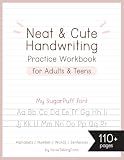
Neat and Cute Handwriting practice Workbook for adults and Teens, My SugarPuff font: Improve your handwriting skill & Practice with Monoline lettering ... for Teen penmanship worksheet for adults

The Comprehensive Guide To Clinical Research: A Practical Handbook For Gaining Insight Into The Clinical Research Industry
The standard font size and font style used in making a research paper is typically Times New Roman, size 12. This font size and style is common because it is easy to read and provides a professional appearance. However, it is always important to follow the specific guidelines set by your instructor or the publication you are submitting your research to.
What is the recommended font size for footnotes in a research paper?
The recommended font size for footnotes in a research paper is typically 10 or 11 points. This size is easy to read and ensures that the footnotes are legible without being too large or distracting from the main text. It is important to follow the specific formatting guidelines provided by your instructor or publisher, as they may have their own requirements for font size.
What is the best font style for printing a research paper?
The best font style for printing a research paper is usually a professional and easy-to-read font. Some commonly used fonts for research papers include Times New Roman, Arial, Calibri, and Garamond. It is recommended to use a font size of at least 12 points for the main body of the text and to use a clean, simple font style that is easy on the eyes and makes the text easy to read. Ultimately, the most important factor is to use a font style that is clear, legible, and professional-looking.
How to format the font size for citations in a research paper?
In most style guides, such as APA or MLA, there are specific guidelines for formatting citations in research papers. Typically, the font size for citations should match the rest of the paper, which is usually in a standard 12-point font. However, when directly quoting a source, it is common to use a smaller font size for the quotation, usually about 10 points.
Additionally, citations should be in a consistent format throughout the paper and should be clearly separated from the rest of the text, either by using quotation marks for direct quotes or by using a different font style (such as italics) for paraphrased information. It is important to follow the specific formatting guidelines of the style guide you are using to ensure that your citations are correct and properly formatted.
What is the standard font style for a research paper?
The most commonly used font style for a research paper is Times New Roman, size 12. It is recommended to use a clear and easy-to-read font style for academic papers to ensure readability and professionalism.
How to make sure the font size is appropriate for journal submission guidelines?
- Check the journal submission guidelines: Make sure to thoroughly read the journal submission guidelines to see if there are any specific requirements regarding font size. Many journals specify a particular font size (e.g., 12-point) that must be used for submissions.
- Use a standard font size: If the journal guidelines do not specify a font size, it is best to use a standard font size such as 12-point Times New Roman or Arial. These fonts are commonly used and are typically considered acceptable for academic writing.
- Check the formatting requirements: Some journals may have specific formatting requirements that include guidelines for font size. Make sure to follow these requirements closely to ensure that your submission meets the journal's standards.
- Adjust the font size if necessary: If you are unsure about the appropriate font size for your submission, you can always adjust the font size to fit within the guidelines. You can try increasing or decreasing the font size slightly to see how it affects the overall appearance of your document.
- Seek feedback: If you are still unsure about the font size of your submission, consider seeking feedback from a colleague, mentor, or professor. They may be able to provide guidance on whether the font size is appropriate for the journal submission guidelines.
Overall, it is important to carefully review the journal submission guidelines and formatting requirements to ensure that your font size meets the standards set by the journal. By following these tips, you can increase the chances of your submission being accepted for publication.